
Science Fiction as Strategic Foresight
Long before consultants drew scenario matrices or trend analysts mapped signals, science fiction writers were doing what futurists do: imagining the world not as it is, but as it might become.
Stanley Kubrick’s 2001: A Space Odyssey gave us HAL 9000 in 1968 — a calm, reasoning machine that turns on its creators. Decades before AI ethics was a field, that film asked: what happens when we build something smarter than ourselves and give it conflicting goals? Gene Roddenberry’s Star Trek imagined a handheld device that could communicate across the planet, access all human knowledge, and translate any language in real time. He called it a communicator. Now we call it a phone. And Ursula K. Le Guin — writing in the 1960s and 70s — imagined a world with no fixed gender in The Left Hand of Darkness, building an entire society on a different biological reality, and quietly asking her readers: who decided things had to be this way?
This is what the best science fiction does. It doesn’t predict the future — it rehearses it.
That’s exactly what strategic foresight is for. We build scenarios not to forecast what will happen, but to expand what we can imagine, so we’re not blindsided when the world shifts. The problem with most foresight work is that it lives in reports. Pages of data, trend lines, and recommendations that inform the brain but rarely feed the imagination.
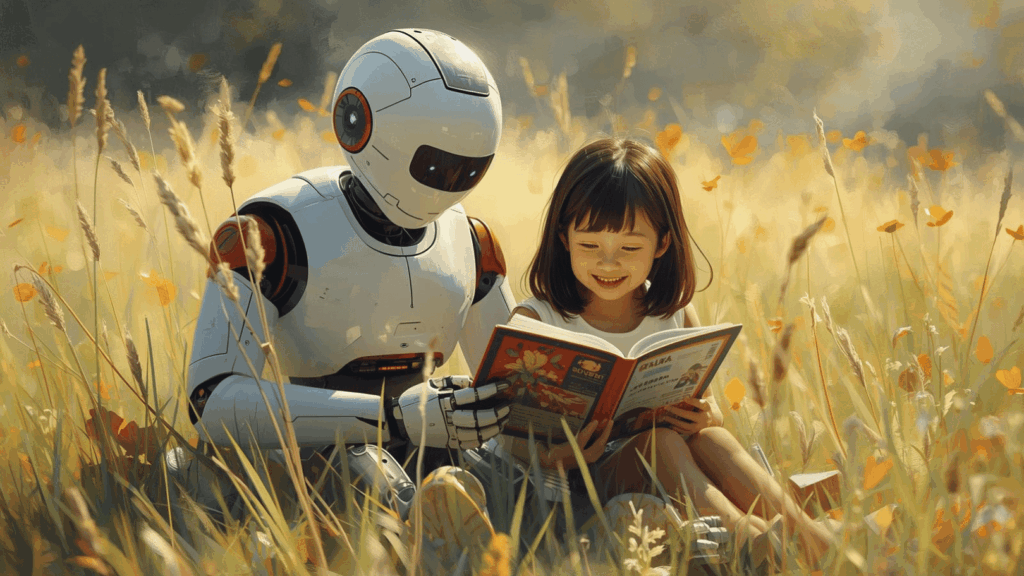
Stories do something data cannot. They put you inside a future. You don’t analyze the implications of climate displacement — you live alongside a character who is navigating it. You don’t model the social effects of AI — you sit with an artificial being who is quietly wondering if she has a soul. That emotional rehearsal changes how leaders think, decide, and act.
If you want to stretch your foresight muscle — and feel the future rather than just read about it — here are three books I recommended in Today for Tomorrow: A Field Guide to Strategic Foresight:
The Ministry for the Future by Kim Stanley Robinson — A near-future reckoning with climate change that is brutal, hopeful, and operationally specific. Robinson doesn’t just imagine catastrophe; he imagines the institutions, financial systems, and human will required to respond to it.
Klara and the Sun by Kazuo Ishiguro — Told through the eyes of an Artificial Friend observing human behavior from a shop window, this novel asks quiet, devastating questions about consciousness, love, and what we owe to the minds we create.
Project Hail Mary by Andy Weir — Pure problem-solving joy. A lone scientist has the fate of the solar system depending on his next decision. A masterclass in thinking under uncertainty.
What books have shaped how you think about the future?
